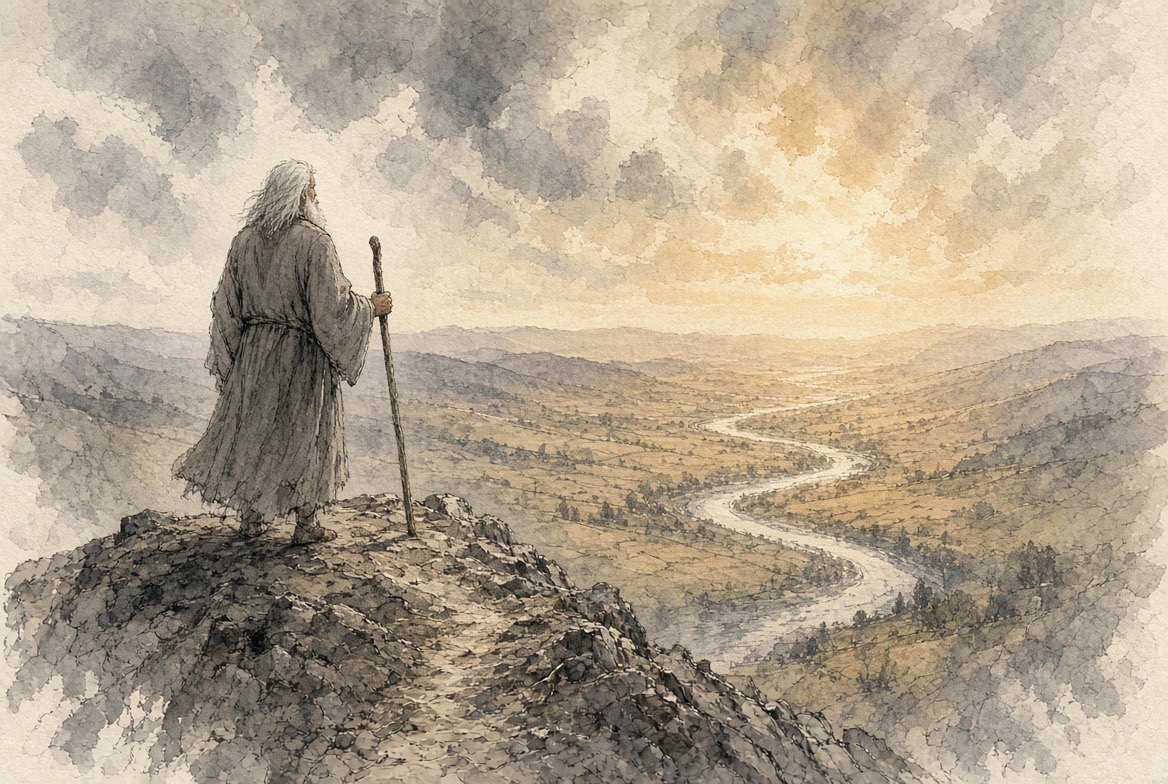
Jimmy Cliff opens with the whole problem. There are many rivers to cross, and he cannot find his way over. He has been wandering, lost, along the white cliffs of Dover. The cliffs face the sea. He can look out at open water and go nowhere.
He tells us what keeps him going. Only his will keeps him alive. He has been beaten and washed up for years, and pride is the only reason he survives. Loneliness will not leave him alone. His woman left without saying why. He admits that some nights his thoughts turn dark. Then he lands on the plainest line in the song. He guesses he will have to try.
The singer knows there is an other side. He is not asking whether the river can be crossed. He is asking where the crossing is, and he cannot find it. The hope has a name and a shore. He is still standing on the bank.
The Song and the Singer
Cliff had been a star in Jamaica since his teens. He moved to England in the 1960s expecting to break through, and he did not. He was touring clubs and getting nowhere. He crossed the Channel again and again for gigs in France and Germany, and the white cliffs were the first and last thing he saw of England each time. Years later he said he "couldn't find my place; frustration fueled the song" (The Telegraph). In another interview he put it more simply: "I came to England with very big hopes and I saw my hopes fading" (The Quietus). He was fighting the music business, and he was fighting the racism he met in England (Jamaica Gleaner).
He recorded it in 1969. It found its wide audience three years later on the soundtrack of The Harder They Come, the film that carried reggae around the world (Wikipedia). The church can be heard in it. The organ swells under him the way it would in a Sunday service.
Cliff kept the song's title as a kind of motto. Decades into a famous career, he was still telling interviewers he had many rivers to cross. They were only different rivers. He died in November 2025 at the age of 81. His wife announced it in words the song had prepared everyone to hear. He had, she wrote, "crossed over" (NBC News).
Let Me Go Over
Scripture's greatest leader ended his life on a riverbank. Moses had brought Israel out of Egypt and through forty years of wilderness. At the end he stood on the plains of Moab with the Jordan in front of him, and he begged. "I pray thee, let me go over, and see the good land that is beyond Jordan" (Deuteronomy 3:25).
God said no. Instead he took Moses up the mountain. "And Moses went up from the plains of Moab unto the mountain of Nebo, to the top of Pisgah… And the LORD shewed him all the land" (Deuteronomy 34:1). Then came the hardest sentence. "I have caused thee to see it with thine eyes, but thou shalt not go over thither" (Deuteronomy 34:4).
Moses saw the far shore and did not reach it. That is Cliff at Dover, looking at the water. The hope is real. It can be seen from where he stands. He has not crossed.
Go and Wash in Jordan
Another man stood at the Jordan and refused to go in. Naaman was a Syrian general, a great man, and a leper. He came to Elisha expecting a ceremony. The prophet sent a servant out with a message instead: "Go and wash in Jordan seven times, and thy flesh shall come again to thee, and thou shalt be clean" (2 Kings 5:10).
Naaman was insulted. He had expected the prophet to come out and strike his hand over the place. The rivers of Damascus were better than this one, he said. "So he turned and went away in a rage" (2 Kings 5:12).
Pride was keeping him on the bank. His servants talked him down. "If the prophet had bid thee do some great thing, wouldest thou not have done it?" (2 Kings 5:13). So he went down and dipped seven times, "and his flesh came again like unto the flesh of a little child, and he was clean" (2 Kings 5:14).
Cliff sings that he survives because of his pride. Naaman survived on pride too, and it nearly kept him a leper. The river did not ask him to be strong. It asked him to go down.
Passed Clean Over
The crossing Moses could not make came later, and the way it came matters. The river was at its worst. "Jordan overfloweth all his banks all the time of harvest" (Joshua 3:15). Nobody found a ford. The priests carried the ark of the covenant into the flood, and when their feet touched the water, the river stopped and stood up in a heap.
Then comes the detail that answers the song. "And the priests that bare the ark of the covenant of the LORD stood firm on dry ground in the midst of Jordan, and all the Israelites passed over on dry ground, until all the people were passed clean over Jordan" (Joshua 3:17). The presence of God stood in the middle of the river until the last person was across. No one was left wandering on the bank.
Isaiah turned that day into a promise for anyone facing water too deep to cross. "When thou passest through the waters, I will be with thee; and through the rivers, they shall not overflow thee" (Isaiah 43:2).
Cliff could not find his way over, so he decided to try. Scripture honors the trying. It also says the way over is opened from the other side, and that God goes down into the river first and stays there until everyone is across.